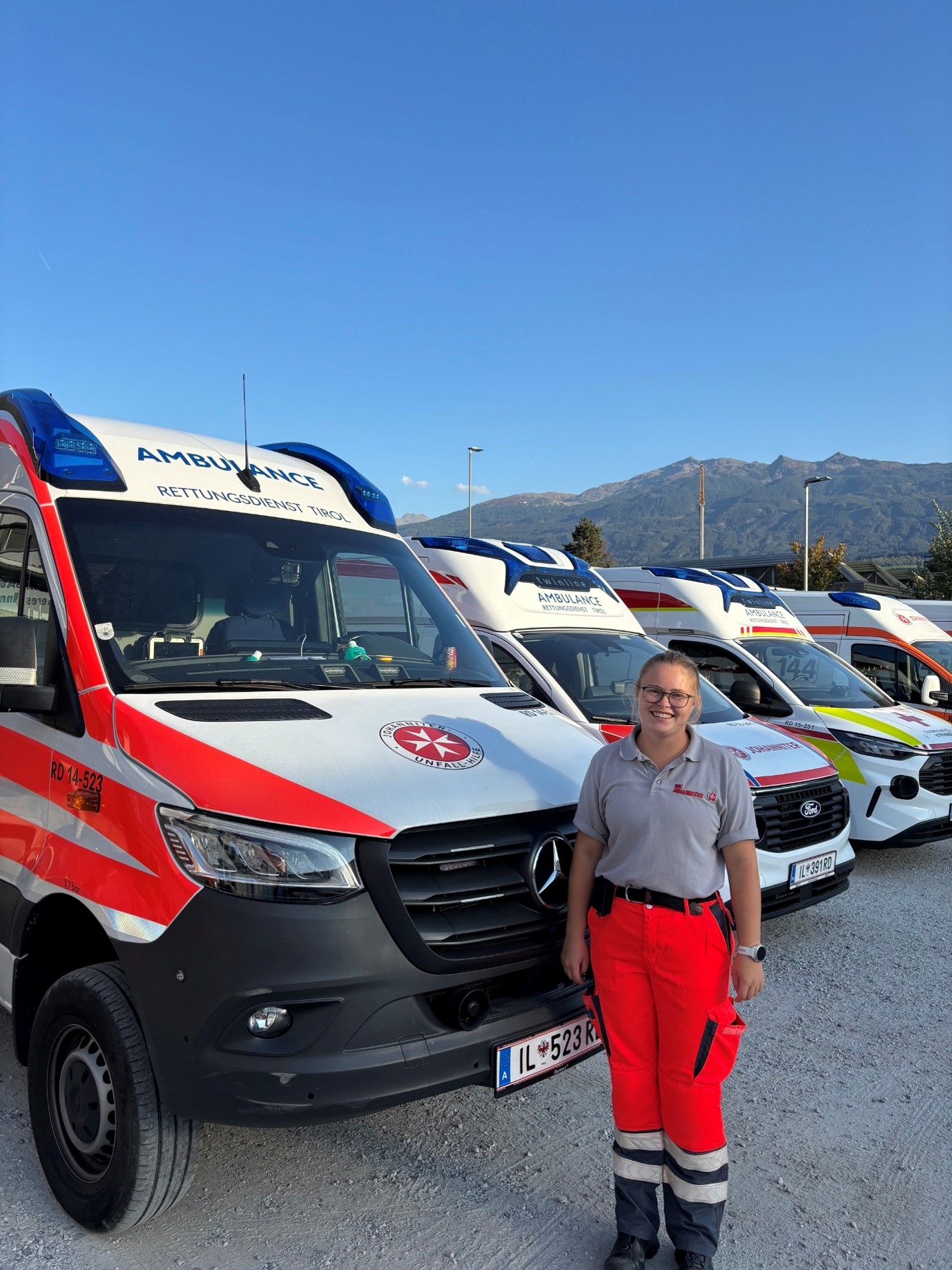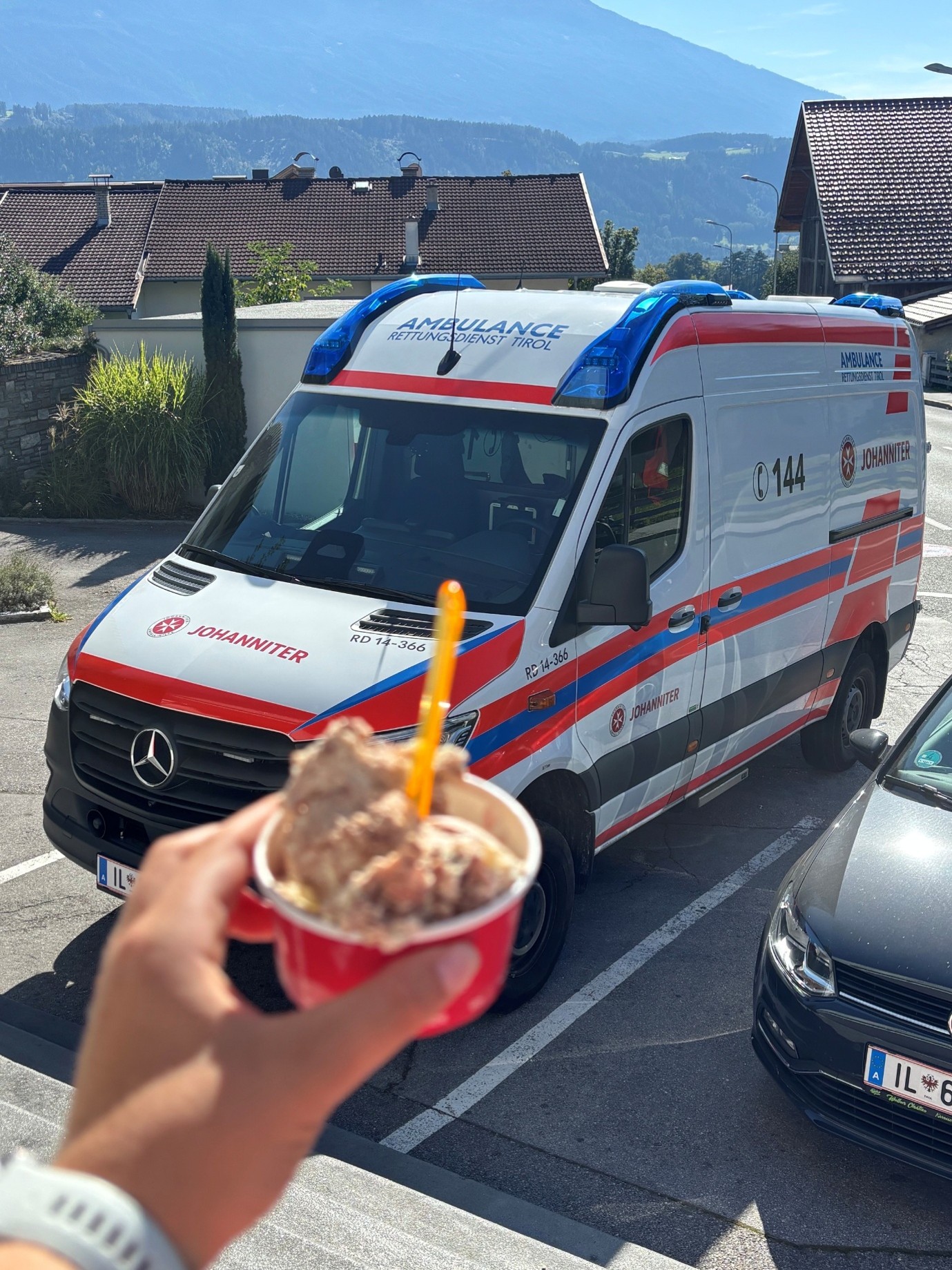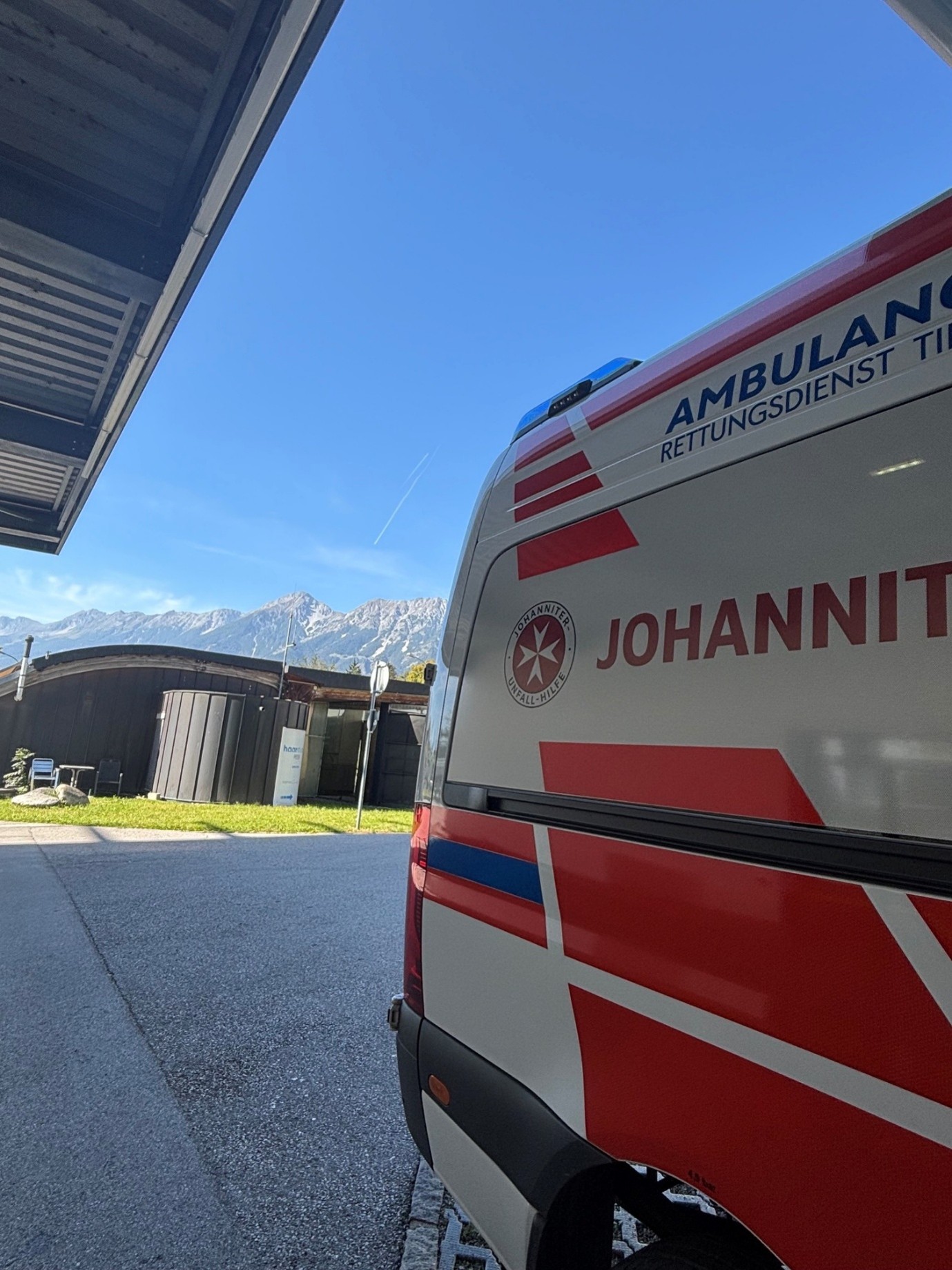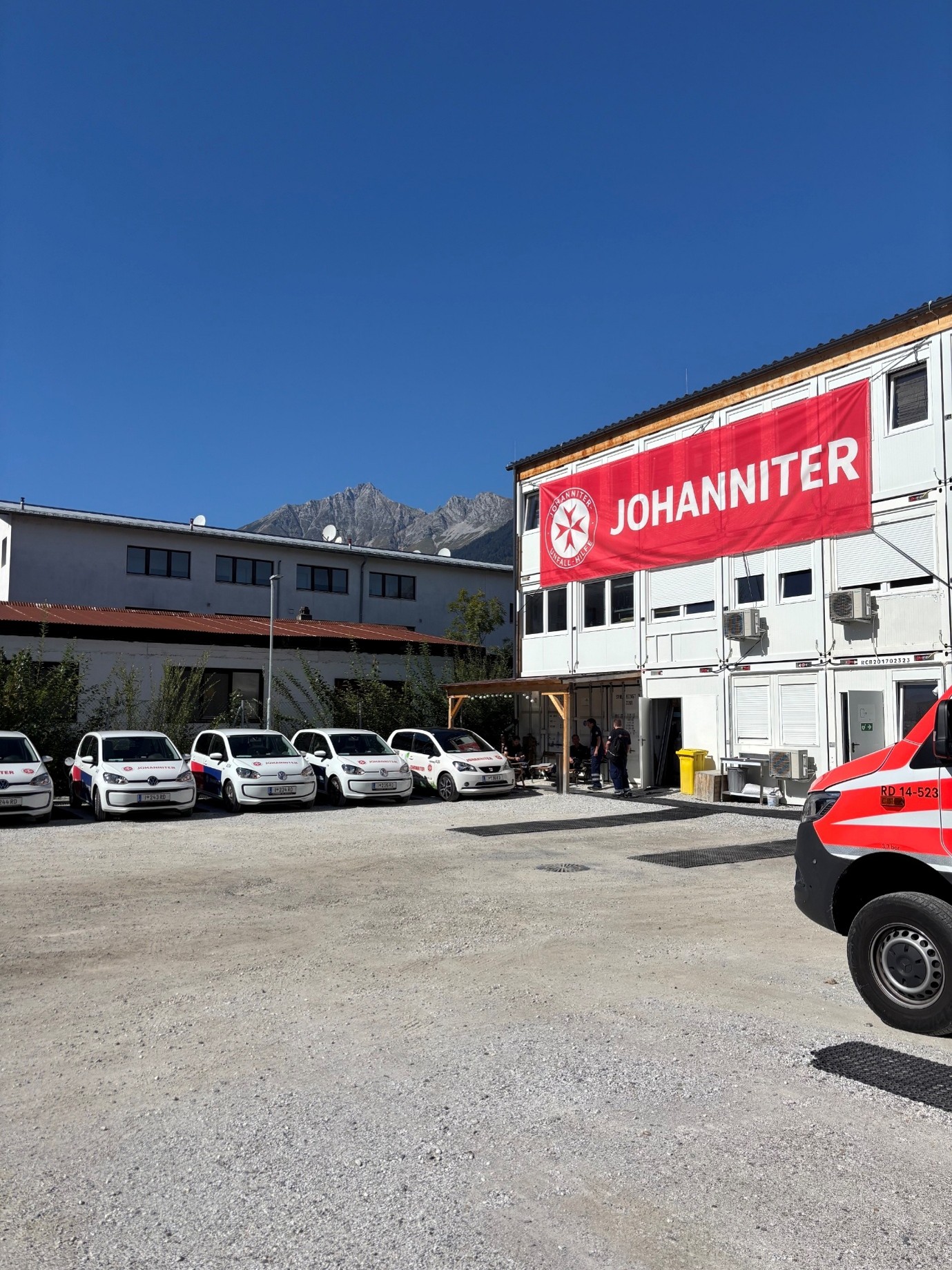
Johanniter Austria offers volunteers from all JOIN member organisations the opportunity to join its patient transport and ambulance service in Innsbruck, Tyrol, throughout the year. Volunteers accompany local teams on their shifts, gaining insights into their work in the heart of the Austrian Alps. At the end of September, Annika from Johanniter Germeny spent a week with the Johanniter team in Innsbruck through the Volunteer Swap programme. Here, she shares her experience.
“At the end of September, I had the opportunity to spend a week with the Johanniter team at their ambulance station in Innsbruck as part of the JOIN programme. I spent three shifts on an emergency ambulance and another on a patient transport vehicle. This gave me fascinating insights into an ambulance service that, at first glance, has many similarities with the German system, but on closer inspection operates differently in some respects.
Differences are already noticeable in the vehicles. The emergency ambulances are slightly smaller, are also equipped with a carry chair and come with four-wheel drive as standard. Compared with German emergency ambulances, they carry less equipment.
I found it particularly interesting to learn about the training and responsibilities of ambulance personnel. While the Rettungssanitäter qualification in Tyrol involves comparatively short training, the route to becoming a Notfallsanitäter is longer, although it is still not a formal vocational apprenticeship. Nevertheless, the scope of practice for Notfallsanitäter is considerably more restricted than in Germany. The ambulance service in Austria relies on and is supported by many volunteer colleagues.
The organisation of the ambulance service also differs. Tyrol has around 60 emergency ambulances operated by various aid organisations. These organisations mainly provide the personnel and ambulance stations, while vehicles and radio equipment are procured centrally by the state of Tyrol. I found cooperation between the organisations to be very straightforward and collegial.
It was also interesting to learn about medical care. With its university hospital, Innsbruck has a hospital providing the highest level of specialist care. Some of the structures have developed historically and differ from what I know in Germany. A conventional central emergency department does not exist in quite the same form. Patients are directed to the relevant specialist departments according to their medical needs.
Alongside all these professional differences, there were also many things that felt familiar. For example, the way call-outs are handled and cooperation with other emergency services closely resemble the German ambulance service. And, of course, the most important thing remains the same everywhere: ultimately, there is a person who needs help.
It was precisely this comparison that made the week so interesting for me. I was able not only to get to know another ambulance service, but also to look at many aspects of my own day-to-day work from a new perspective.
And, of course, there had to be time for Innsbruck itself. Between shifts, there were opportunities to explore the city and enjoy the impressive views of the surrounding mountains. For me, meeting and exchanging experiences with the paid staff and volunteers there was a very valuable experience.
Many thanks to the Johanniter colleagues in Innsbruck for their openness and the interesting insights, and to everyone who made this placement possible through the JOIN programme!”